


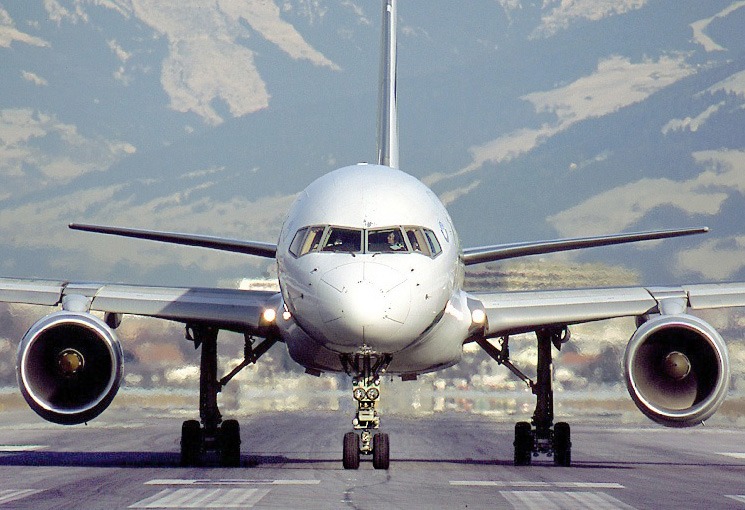
Aviation News – In late 1998, Royal Nepal Airlines Corporation (RNAC, now Nepal Airlines) urgently needed a Boeing 757 to meet peak tourist-season demand after returning a leased aircraft. Officials signed a lease agreement with Chase Air, a purported American company, and wired an advance payment of $783,750. The aircraft never arrived, and the funds disappeared through a chain of fraudulent international wire transfers.
What initially appeared to be a routine aircraft leasing arrangement turned out to be a sophisticated international wire-fraud scheme orchestrated by a US-based operator using forged documents. The case exposed serious vulnerabilities in Nepal’s state-owned airline procurement system and led to swift civil and criminal proceedings in New York courts. Partial funds were later recovered through legal action in the United States, but the episode triggered years of domestic investigation and highlighted the risks of cross-border aviation transactions.
Nepal Airlines Corporation’s history is marked by repeated episodes of scandal and corruption, but few stand out as starkly as the 1998 Chase Air scandal. In a deal that bypassed basic due diligence, the state-owned carrier paid $783,750 in advance to lease a Boeing 757 from a company that had neither an aircraft nor a verifiable office. The aircraft never arrived, and the money was never returned.
The agreement was signed during the coalition government of Prime Minister Girija Prasad Koirala, with tourism affairs overseen at the time by Yamalal Kandel. A politically connected chairman, Hong Kong Rana Magar—linked to CPN-ML general secretary Bamdev Gautam—reportedly facilitated the lease agreement with “Chase Air,” a firm that existed only on paper.
The episode established a long-standing pattern in the institution: politically influenced appointments, opaque contracting processes, and limited accountability despite significant financial losses. As investigations later highlighted, the scandal was not an isolated failure but part of a recurring structural problem that has continued to affect the airline over the decades.
Here is Nepal News’s concise explainer on what you need to know about Nepal Airlines Corporation’s Chase Air Scandal.
What was Chase Air, including its history, formation, and current status?
Chase Air was a short-lived shell company created solely as a vehicle for fraud, with no genuine aviation operations, fleet, or legitimate business activity. It was formed in early 1998 in Arlington, Texas, by Cecil Winters, who operated it virtually alone from a small rented office equipped only with a fax machine and a cell phone that he personally answered.
The company maintained a basic website and presented itself as an aircraft leasing firm capable of providing commercial jets like the Boeing 757.
In reality, it had no aircraft, no employees beyond Winters, no verifiable financial backing, and no history of legitimate transactions in the aviation industry.
The entity’s sole purpose appears to have been to deceive parties seeking quick aircraft leases by using forged documents and false assurances. After the 1998 scam involving Royal Nepal Airlines, Chase Air ceased all activity and effectively dissolved without any formal ongoing operations.
As of 2026, the company has no current status, assets, or presence in the aviation sector; it exists only as a historical footnote in fraud cases. No records indicate revival or legitimate successor entities, and Winters’ later low-profile activities (if any) were unrelated to aviation leasing.
This ephemeral nature made it a classic example of a fly-by-night operation designed to exploit urgent international deals before disappearing once funds were secured. https://english.nepalnews.com/s/explainers/the-chase-air-scandal-how-a-fake-us-leasing-firm-defrauded-nepals-national-airline/