


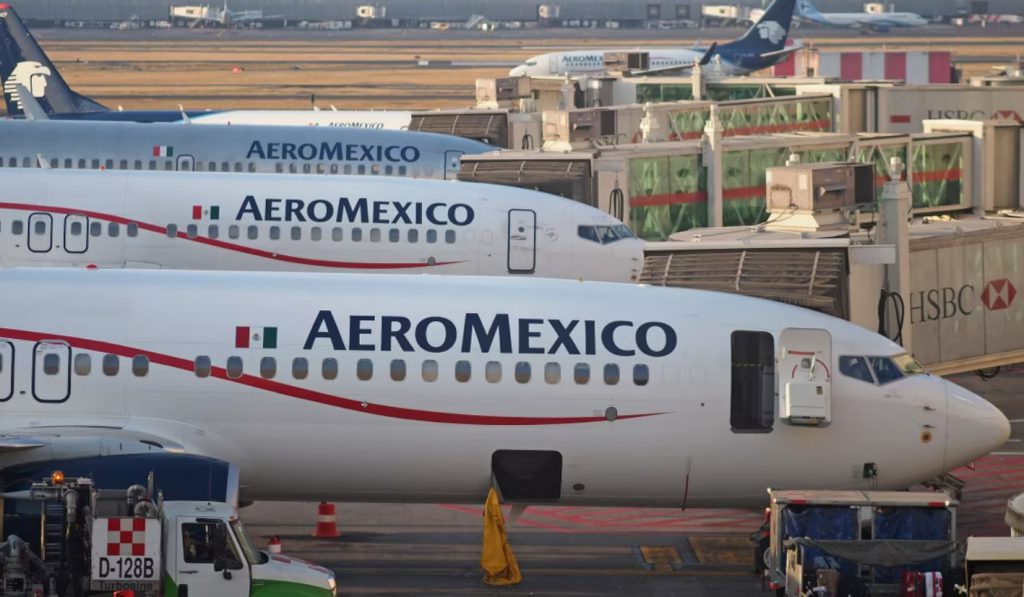
This week, the Federal Aviation Administration (FAA) held a new International Aviation Safety Assessment (IASA) audit in Mexico and could reportedly restore the country’s Category 1 status. No official announcement has been made by either the FAA or Mexico’s Civil Aviation Federal Agency (AFAC).
Is Mexico returning to Category 1?
The FAA downgraded Mexico to Category 2 in May 2021. At the time, the agency announced that the government of Mexico did not meet International Civil Aviation Organization (ICAO) safety standards. For the last two years, the Mexican civil aviation agency has been working towards restoring Category 1 status. In the meantime, local carriers have been unable to launch new routes or deploy new planes in services to the United States, among other restrictions.
On Friday, the Mexican newspaper El Financiero reported the IASA audit was complete, and the FAA did not make any new findings, which is good news for recovering Category 1 status. Nonetheless, this is only a preliminary out-of-the-record report, and neither the FAA nor AFAC have made public announcements. Simple Flying reached the FAA to comment on the story. The agency said, “We continue to provide assistance to Mexico’s civil aviation authority.”
The FAA now has up to 40 days to analyze the audit results and inform the Mexican government through the corresponding diplomatic channels if the country recovers Category 1 status. Experts expect the official announcement to be made within the next two to four weeks.
What would this mean for Mexican carriers?
Resuming Category 1 status was critical for the development of the Mexican aviation industry. For the last two years, Mexican carriers have remained constrained, unable to increase their capacity and route map to the United States, while US carriers have not faced similar restrictions.
Once Category 1 is restored, Mexican airlines will be able to launch new routes (for instance, they could announce new destinations from Mexico City’s new Felipe Ángeles International Airport). They could also add recently received planes (any plane received after the degradation) to their operating plans to the United States and strengthen their partnerships with US carriers.
For Viva Aerobus, restoring Category 1 status is essential to continue with its Joint Venture Agreement process with US ultra-low-cost carrier Allegiant Air. This Joint Venture includes an investment by Allegiant Air. Through their partnership, they expect to operate approximately 38,000 additional departures, offer average fares 58% lower than the current market, serve 6.4 million extra passengers, add 18 aircraft, and generate $790 million in customer savings through 2026. Allegiant Air expects to launch flights to Mexico by late 2024.
Why was Mexico in Category 2?
Mexico was downgraded to Category 2 for failing to meet ICAO’s safety standards. During the IASA audit in 2021, the FAA identified several areas of non-compliance with minimum safety standards. Being downgraded to Category 2 rating means “that the country’s laws or regulations lack the necessary requirements to oversee the country’s air carriers in accordance with minimum international safety standards, or the civil aviation authority is lacking in one or more areas such as technical expertise, trained personnel, record keeping, inspection procedures, or resolution of safety concerns,” according to the FAA.
Eleven other countries are currently downgraded to Category 2 by the FAA. These are Bangladesh, Mexico, the Organization of Eastern Caribbean States (Antigua & Barbuda, Dominica, Grenada, St. Lucia, St. Vincent and the Grenadines, and St. Kitts and Nevis), Russia, Thailand, and Venezuela.
What do you think about Mexico possibly regaining Category 1 status? Let us know in the comments.
Source: El Financiero.