


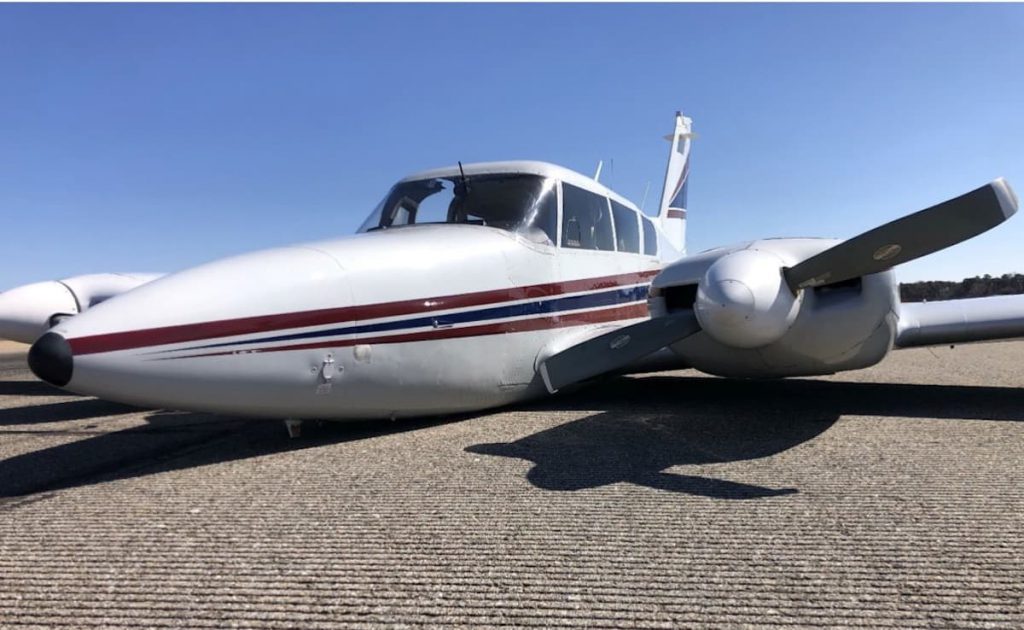
As unlikely as it might seem, a series of events have unfolded at my home airport over the past year that are sometimes embarrassing, occasionally maddening, always expensive, and often preventable.
I’m talking about gear-up landings. I’ve seen three over the past few months, live and in person.
For those who are keeping track, three is a lot.
It would be easy to blame the pilots for these short, unpleasant slides down the runway. And many do. Sometimes with reason.
Let’s be honest: When the workload is high, the distractions are plentiful, and the poor human at the controls is tired, it’s easy to forget to move that one little switch that will make the difference between a squeaker and a scrapper of a landing. Yes, forgetting to run those memorized pre-landing checklists can be a problem.
I’m not pointing fingers, though. While I haven’t yet touched down on pavement with my wheels up, I’ve come close. The experience gave me humility, a quality that is not valued nearly enough.
I pumped the gear up after departure in anticipation of landing on a series of lakes. But with the elation of this wonderful flight coming to an end, coupled with my unwise decision to chat casually with my instructor about things that were not pertinent to landing, I missed an important step in the process.


To this day I can still hear my instructor in my ear as I descended on short final, “Let’s go around.” I did. Then he said something curious, “We were just going to make a lot of sparks anyway.”
I’d still tell it, of course. That’s what I do. I tell stories. But each time I accessed the memory I would relive just a bit of the shame I felt that day.
A simple GUMPS check would have resolved that problem. A habit I learned early on when flying twins, but one that I let drift away as I spent many years flying aircraft with gear that could only fold up if involved in a violent impact. Gas, Undercarriage, Mixture, Props, Seatbelts had been my traffic pattern mantra for a time. I never should have stopped using it, but I did. That was poor judgment.
Of course, that commitment to an automatic response can be troublesome, too. I once made the mistake of doing a GUMPS check prior to landing on a lake in an ICON A5. I’m a big fan of the ICON and have felt privileged every time I’ve gotten to fly one. In this case I had been shopping for a retractable gear airplane for a period of time and shifted into that automatic response when entering the pattern.


“Gear down for landing,” I announced as I got myself established on downwind. The instructor pilot I was flying with gave me a curious side-eye and asked, “Are you sure?” That’s when it hit me. I was landing on water. I needed to do a GUMPS check, but the G part needed to be headed in the other direction. “Gear up for a water landing,” was the more appropriate response.
At least one of the gear-up issues I saw locally was the result of a gear collapse. It happens. One or more gear legs extend, but don’t lock. After touchdown, on rollout, the unlocked gear leg simply gives in and folds up. The sudden bank and loud scraping sound make it clear to all far and wide what happened. But not why it happened.
Was it a maintenance issue? Perhaps the pilot didn’t have three green lights on the panel. Maybe the lights were green, but the locks failed. Or maybe the wear and tear of regular use over many years simply provided enough slack in the system that otherwise good-looking parts were no longer able to remain aligned sufficiently enough to work collaboratively as they were designed to do.
Of course, in our imagination we are always the one wearing the white hat. The good guy. The infallible practitioner of whatever skill we feel was lacking. In reality we’re as prone to error as the next person. Our machinery can fail just as easily as anyone else’s. Any one of us can suffer a brain fade, and we would be wise to acknowledge that fact — at least to ourselves.
With a smattering of compassion I can admit that while I might feel embarrassment or shame over the shortcomings I’ve exhibited while flying, there is no benefit to any of us foisting those negative emotions on others who have had a bad day.
The truth is pilots can adopt procedures that, if followed, would prevent most gear-up events. We should, too. Fewer insurance claims result in lower insurance costs. Fewer gear-ups also means fewer runway closures. Everybody wins.
While we can never prevent all gear-related incidents, we can have a positive impact on the overall number of belly landings that come to pass each year. The key is personal responsibility. Be the PIC.
I’ve been lucky enough to avoid the issue to this point in my career. But that was luck. In each case, someone saved me from myself.
Now, I try to be more careful, more focused, more professional about my checklists. It’s easy and pays off big time in embarrassment protection. That works for me.
source: https://generalaviationnews.com/2023/06/13/its-the-gear-that-gets-us/