


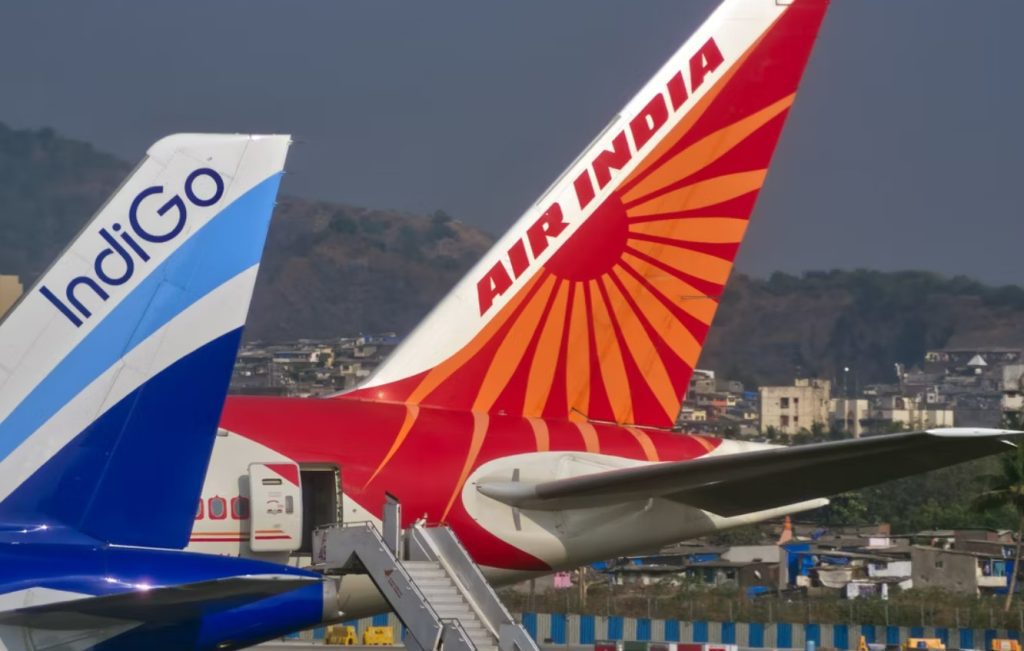
If current trends are anything to go by, the aviation landscape in India will look significantly different in about a decade. The country has never seen aircraft orders as big as those placed by IndiGo and Air India, and demand for air travel has moved beyond just the big metro cities and spilled over into tier 2 and 3 towns.
But what about ground infrastructure and the workforce to sustain such growth? The speed of development in previous decades has been quite uninspiring, but the pace has picked up in the last few years. So, will it keep up with the projected growth? Let’s find out.
Massive growth projected
India currently has around 700 aircraft registered with commercial airlines. But the overall fleet strength of the country will undergo massive expansion in the coming years. IndiGo and Air India alone have more than 1,000 planes on order, and other smaller players, including Akasa Air, are slated to receive more aircraft, too.
Get the latest aviation news straight to your inbox: Sign up for our newsletters today.
Then there’s the ever-growing number of passengers taking to the skies. According to the Airports Authority of India, by 2024-25, India’s passenger volume could increase to more than 410 million. From the looks of it, all the new aircraft currently on order will have ample demand in the coming decades.
But will there be adequate infrastructure by the time these planes arrive? Have aviation authorities and even airlines considered the pace of growth to match the delivery schedule of all the new aircraft?
New airports
The leaders at the top and industry experts seem confident of the development currently taking place. Also, the new planes will not arrive all at once. In fact, deliveries of IndiGo’s latest order will only start in 2030, and by then, hundreds of new airports are expected to be operational in the country. Besides, many of the new planes will also replace the outgoing older aircraft of the carriers.
Still, with major airports in the country operating at capacity and airlines increasingly finding it difficult to secure parking space, will there be enough airports in the coming years? Aviation Minister Jyotiraditya Scindia told The Economic Times,
“Coming to infrastructure, we had 74 airports in 2013-14 but, today, if you include heliports and waterdromes (for seaplanes), the number has gone up to 148. A huge expansion of physical infrastructure is already visible.
“India will have a fleet size of 1,200-1,400 planes by 2030, up from the current 700. We will have enough airport capacity. I am looking at the number of airports growing from 148 now to close to 230-240 during this period. I am also looking at passenger traffic growing from the current 14.5 crore (145 million) a year to almost 42 crore by 2030, which means a three-fold increase. So yes, there is a long journey yet to be covered.”
Development at various levels
The Indian government revealed earlier this year that it will invest more than $11 billion in airport infrastructure. There are two new airports being built near Delhi and Mumbai on top of several others in smaller towns under the regional UDAN scheme.
Check out more Indian aviation news here.
But it’s not just airport ‘hardware’ that is being built or upgraded; there’s an increasing focus on reliance on technology for a smoother passenger experience. SITA, the technology provider for the travel and transport industry, has announced that it has secured a landmark deal with the Airports Authority of India to provide technology for various processes to 43 of India’s biggest airports.
The deal will see improvements in over 2,700 passenger touchpoints, and the technologies are scalable to an additional 40 airports over the next seven years. Over 500 million passengers are expected to be processed during this period.
The rollout of new cloud technology will enable Indian airports to shift to common-use passenger experiences where multiple airlines can leverage the same infrastructure, such as check-in counters, self-service kiosks, and boarding gates.
The road to aviation infrastructure development in India is still a long one. But recent developments and initiatives by aviation authorities, the ministry, airlines, and other stakeholders suggest that things will improve dramatically in the coming years.
What are your views on this? Please leave your comments below.
With inputs from The Economic Times