


Aviation news international – Hub airports allow larger airlines to funnel their passengers through one point, increasing productivity and maximizing load factors. But what is the hub airport experience like for passengers? What advantages does traveling through such a large airport bring?
5Array of facilities
Hub airports have no shortage of facilities for passengers to pass the time, with ample places to eat, shop, and relax. One of the world’s best examples of an airport that has become a destination in its own right, thanks to the abundance of attractions on offer, is Singapore Changi Airport (SIN).
Singapore Changi Airport, home to the country’s flag carrier Singapore Airlines and its low-cost subsidiary Scoot, was awarded the accolade of World’s Best Airport 2023 by Skytrax. For years, the airport has been a firm favorite among travelers worldwide, and with attractions ranging from a butterfly garden to a 130 ft waterfall, it is easy to see why.
4World-class airport lounges
With a significant volume of flights at a hub airport, airlines are not afraid to invest in industry-leading lounge facilities for eligible passengers. Air France’s First Class Lounge at Paris Charles de Gaulle Airport (CDG) and Cathay Pacific’s The Pier First Class Lounge at Hong Kong International Airport (HKG), for example, regularly win awards for their passenger experience, design, and facilities.
3Worldwide connections
Hub airports are designed specifically to offer convenient connections, with airlines scheduling their flights to operate in several banks, or waves, throughout the day. This streamlines the operation and minimizes connection times for passengers.
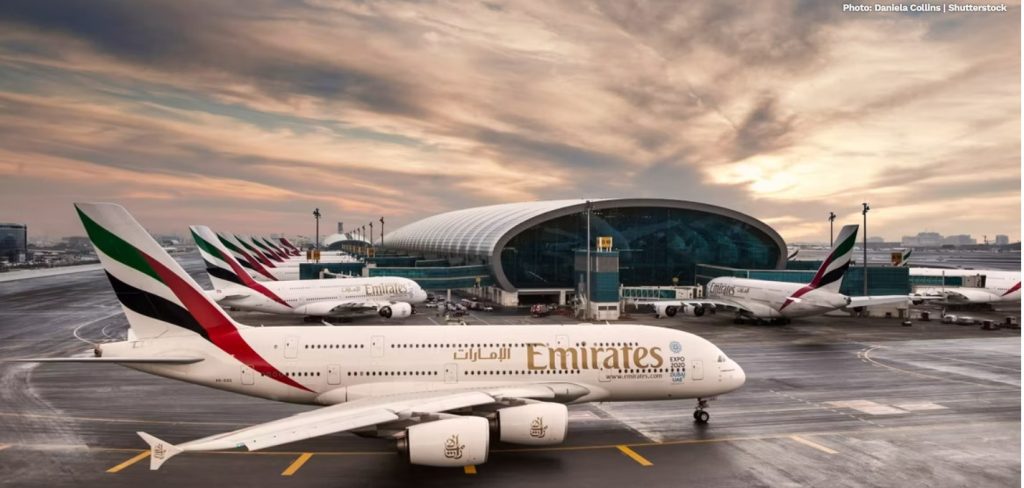
Flying through a hub airport also opens up a greater variety of destinations for passengers. Emirates, for example, flies to over 130 destinations around the world from its hub at Dubai International Airport (DXB), opening up an impressive array of connecting opportunities for passengers, such as from São Paulo (GRU) to Seoul (ICN), or from Madrid (MAD) to Sydney (SYD).
2Lower fares
Hub airports often see more than one airline operating the same route. More than 80 airlines operate from Singapore Changi Airport, for example, with significant overlap on routes. Such increased competition can lead to lower fares, as airlines battle to win passengers.
Get the latest aviation news straight to your inbox: Sign up for our newsletters today.
1Impressive architecture
Many cities use their primary airports to showcase spectacular architectural design that is rarely seen at smaller, regional airports. When Terminal 4 at Adolfo Suárez Madrid-Barajas Airport (MAD) opened in 2006, passengers were delighted at bright, open spaces and undulating bamboo ceiling. Even today, almost 20 years later, it still pushes the boundaries of architectural design.
More recently, when Beijing Daxing Airport (PKX) opened in 2019, it debuted one of the world’s largest single terminal buildings, capable of handling up to 75 million passengers per year. The airport’s unique starfish shape was designed by renowned architect Zaha Hadid.