


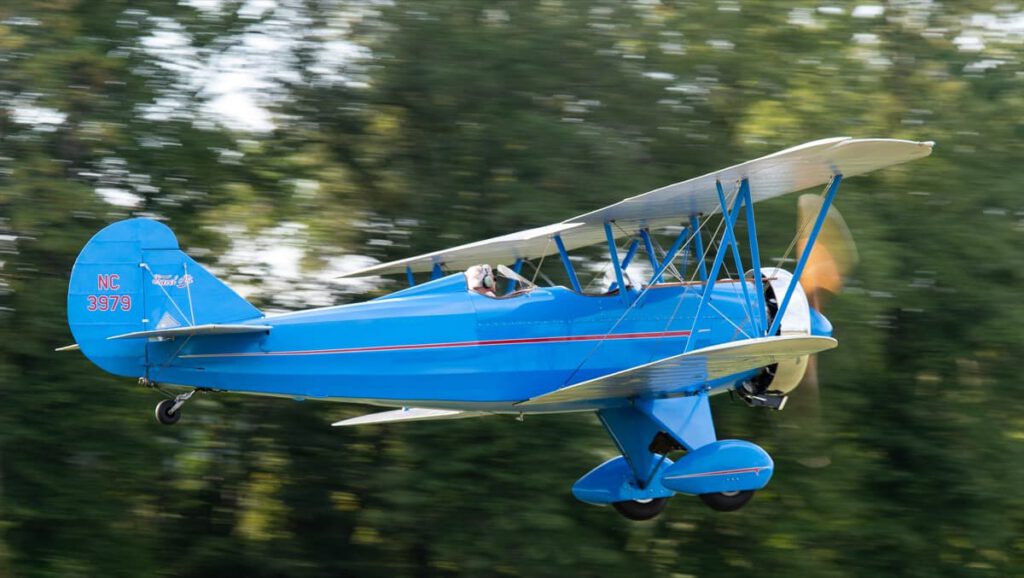
Aviation news international – If you’ve been to the Triple Tree Fly-In, you make it an annual getaway. If you haven’t, raise your standards. Treat yourself to Triple Tree.
Sure, EAA AirVenture Oshkosh is a fantastic summer showcase of the latest in general aviation aircraft, technology, education, and air shows. SUN ‘n FUN in Lakeland, Florida, is a spring break joy for general aviation that raises scholarships for young and new pilots.
But Triple Tree is more like a big happy family reunion. More relaxed. More intimate.
“We’re all about fun, friendship, and Southern hospitality,” says Triple Tree Founder Pat Hartness, during the 2023 fly-in, which was held Sept. 18-24 at Triple Tree Aerodrome in Woodruff, South Carolina.
Families bring their kids and dogs. Friends meet over cookouts to swap stories. Hangar talk ensues between experienced and new mechanics and pilots. Friendships form.


People hike Triple Tree’s three miles of hiking trails and fish in Mirror Lake, Montana Lake, and the Enoree River. Workshops run at the upper pavilion while teens and kids explore the flight simulators.


Triple Tree cultivates hospitality, friendship, and fun with the love and wonder of aviation. Some years feature demonstrations of radio-controlled aircraft, a hot air balloon, or someone selling rides in a P-51 Mustang or a T-6.
Every year, the Thursday night steak night starts around the long trench grills, where diners cook their steak and select side dishes and desserts at tables served by volunteers.


How many fly-ins have a grass runway and a tower? Kudos to the Greenville-based volunteer air traffic controllers who operate the Triple Tree Aerodrome (SC00) tower each year for the “full-scale” fly-in.
Welcome to the uniqueness of Triple Tree.


Recognition for Uncle John
Pat Hartness’s uncle, John Hartness, learned to fly at age 16. At Triple Tree, he’s everybody’s “Uncle John,” and this year, he celebrated his 100th birthday with a flight in an AirCam with Pat Derrick on June 25, 2023, at Triple Tree Aerodrome.
That flight is featured on Triple Tree Fly-In’s 16th annual commemorative plate.
“When I was young, I had to wring chicken necks. Now I know how it feels,” he says with a laugh.
After Uncle John was honored for his dedication to aviation on Saturday, Sept. 23, Triple Tree’s Executive Director Robb Williams presented a history of the property and its development into the 400-acre aviation facility of today.


Williams noted that with only three full-time employees, the maintenance and year-round events at Triple Tree Aerodrome happen thanks to an army of volunteers.
Joining Williams as full-time employees are Facilities Manager Matt Crane and Facilities Coordinator Anthony Phillips.
“There are 278 acres of grass to mow,” Crane says. “There are two paid staff members handling the facilities. Do you want to know how much grass the paid staff mows? Zero. It’s all done by volunteers.”
Volunteers water, fertilize, and mow the 7,000-foot turf runway and campgrounds.

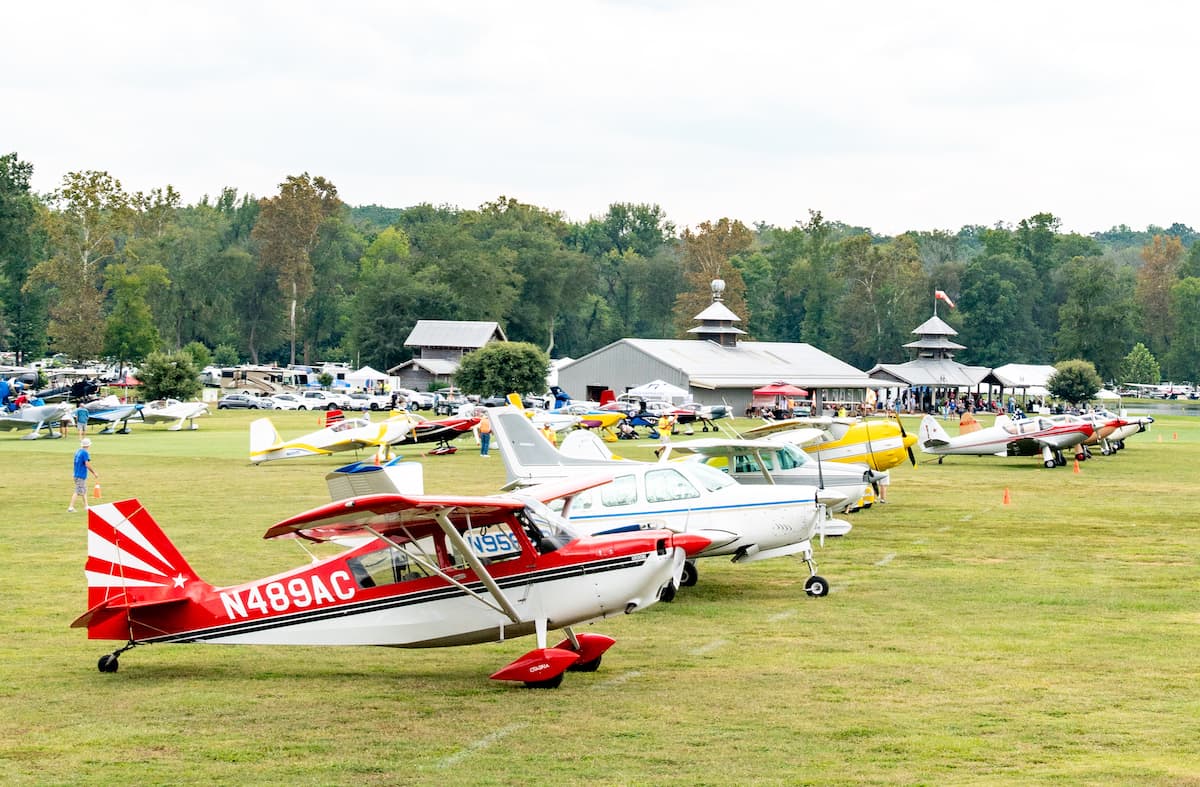
They also maintain multiple aircraft, a fuel farm, a control tower, eight buildings, and more than 100 “premium campsites,” which feature water and electric hookups.
Williams estimated volunteers labor for 5,000 hours each year.
There are 11 annual events held each year at Triple Tree. Of the five “full-scale” aircraft events yearly, the Triple Tree Fly-In is the most popular. The other six are radio-controlled aircraft events, including Joe Nall Week, which is the largest radio-controlled airplane event in the world.
In addition to the big events, there are multiple STEM visits from local schools, according to Williams.


Visibile Changes
This year’s most visible changes were rows of new sycamore trees added along the entry road to the lower pavilion.
At the upper pavilion, the grounds between the Buehler Education Building, the Hangar, and the cookout area have been extended toward Lake Montana.
The old fireplace was removed, opening a view and foot traffic from the hangar to the Buehler Education Building.


The Thursday steak night cookout, Friday’s Taste of Triple Tree, and the Saturday night barbecue were held on the newly expanded grounds overlooking Lake Montana and the lower section of the facility. The Taste of Triple Tree is a sampling of food from local restaurants and organizations.
At the lower end of the grounds, more waterlilies and flowers have been added around the Monet-theme bridge on Granny Lake.


And One Invisible Change
One invisible change this year is that on Sept. 25, 2023, the airspace of Triple Tree Aerodrome was named a FRIA or FAA-Recognized Identification Area.
This exempts Triple Tree from the new FAA regulation requiring all Unmanned Aerial Systems (UAS), including model aircraft, to carry a broadcast or remote ID module. This remote ID module is like a transponder.
To fly a remote-controlled aircraft at Triple Tree, participants must be members of the Academy of Model Aeronautics (AMA), fly the RC aircraft during a Triple Tree-sponsored special event, and maintain visual contact with the model during flight.


Looking towards the future, Williams noted that two annual events at Triple Tree will be combined in 2024 — The Triple Tree Fly-In and the Young Aviators Fly-In.
“Triple Tree has given $60,000 in scholarships so far,” he says. “We plan to continue attracting young people into aviation education and careers through the programs and events here.”
More Photos From the 2023 Triple Tree Fly-In


source: https://generalaviationnews.com/2023/10/04/fun-friendship-and-southern-hospitality/