Why Was The Douglas DC-5 Unpopular?
While never successful, the Douglas DC-5 inspired Fokker to build the F-27.
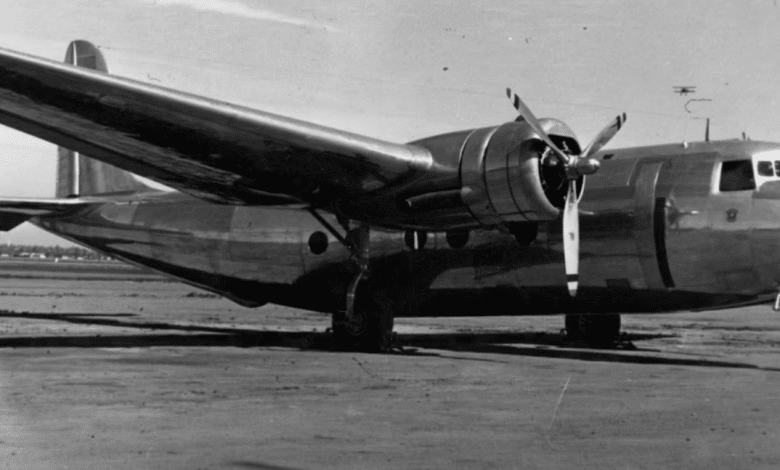
Today we will look at the twin-engine Douglas DC-5 and see how a sequence of events only saw five civilian airliners built. Back in the late 1930s, as the United States was still recovering from the depression, the Southern California Douglas Aircraft Company was riding high.
Two years before work began on the DC-5, the plane maker had released the Douglas DC-3, which became an instant hit with the airlines and the military. The DC-4 soon followed, and then Douglas decided to build the DC-5. Similar to the DC-3 and DC-4 but with the capability of operating out of smaller airports. The plane featured a high wing and tricycle landing gear and a choice of two engines the Pratt & Whitney R-1690 Hornet or the Wright R-1820 Cyclone.
The prototype first flew in February 1939
Powered by the Wright engine, the prototype Douglas DC-5 made its maiden flight on February 20, 1939. When Douglas designed the DC-5, it was meant to carry 16 passengers in three compartments. However, it was possible to reconfigure the cabin to have as many as 22 seats.
The plane’s most significant selling point was that its high wing offered unobstructed views out of the windows, and because the engines were further away from the fuselage, the noise would be less than on other similar planes
KLM was the only airline to receive the DC-5
Already familiar with the previous Douglas models, orders soon began to trickle in from Pennsylvania Central Airlines (PCA) KLM, and Imperial Airways, which would later become the British Overseas Aircraft Corporation (BOAC). In addition to the commercial orders, the United States Navy was interested in the DC-5, ordering three for the Navy and four for the Marine Corps.
Just as deliveries were to begin, war erupted in Europe, and the British Government canceled the DC-5 order from Imperial Airways in favor of military aircraft that could be used for the war effort.
In the United States, PCA had a change of heart, canceling its order, leaving just the four planes ordered by KLM and the seven by the Navy. KLM received its four aircraft and used two to fly from its bases in Curaçao and Suriname. The other two went to Indonesia and were later used to evacuate civilians to Australia.
The American military received its aircraft, and production stopped while Douglas focused on manufacturing planes for the Air Force. When the war in the Pacific ended on September 2, 1945, Douglas decided not to resume production on the DC-5 because of an abundance of surplus ex-military DC-3s and DC-4s flooding the marketplace.
Only 12 DC-5s were ever built
In total, 12 DC-5s were built, the prototype four for KLM and seven for the Navy. Interestingly the prototype, fitted with eight passenger seats, became the personal aircraft of Boeing founder William Boeing.
Following the war, the DC-5s that were in Australia were used briefly by Australian National Airways for domestic flights within Australia. Now with only one aircraft airworthy, it was sold to an unknown airline in Australia. The plane was then secretly transported to Israel and used during the 1948 Arab–Israeli War.
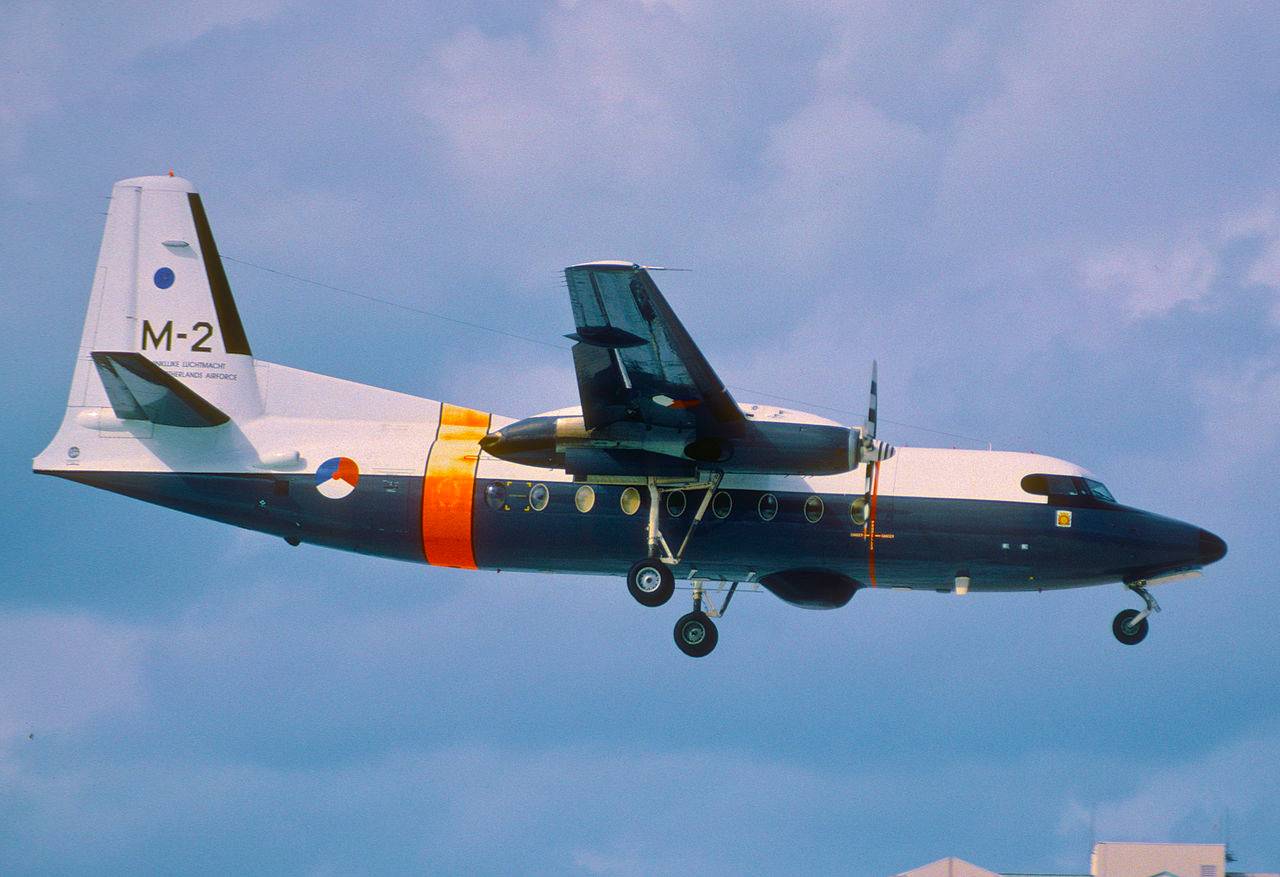
While the Douglas DC-5 never became a success, its design inspired the Fokker F27 Friendship turboprop airliner.