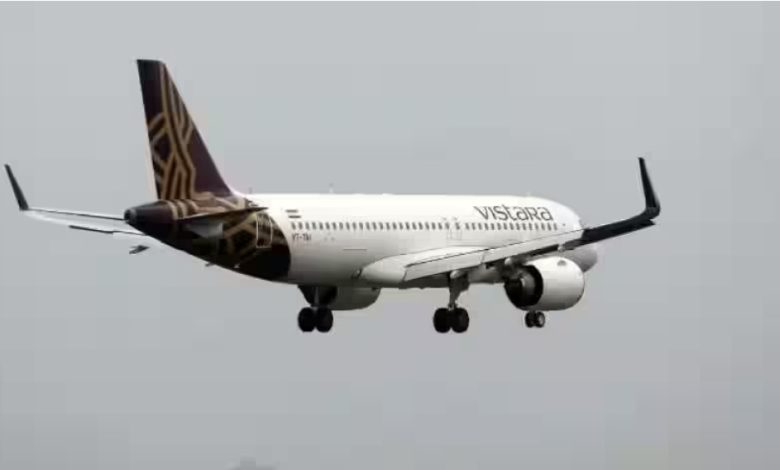
Aviation news international – The Tata group on May 4 initiated the use of sustainable aviation fuel (SAF), as Vistara became the first airline in India to successfully operate a wide-body commercial domestic flight from Delhi to Mumbai using a blend of 17 per cent SAF to 83 per cent conventional jet fuel.
AirAsia India, a low-cost subsidiary of Air India, followed suit, operating the Pune-Delhi sector on May 19 using an indigenously-manufactured SAF blend.
Upon receiving the AirAsia flight at Delhi’s Indira Gandhi International Airport, Hardeep Singh Puri, the Minister for Petroleum and Natural Gas, said, “This would be the first domestic commercial passenger flight with SAF blending of up to one per cent in demonstration mode.”
What is SAF?
SAF is a type of biofuel that is used to power aircraft. Its chemical and physical properties are identical to that of conventional jet fuel, albeit with a significantly lower carbon footprint. SAF is made by using feedstocks consisting of various material such as cooking oil, municipal waste, agricultural residue, plants, and waste gasses.
According to the International Air Transport Association (IATA), the use of SAF can significantly bring down carbon dioxide emissions by about 80 per cent. Additionally, SAF could potentially stabilise fuel prices in the aviation sector, making it easier for airlines to budget and predict their operating expenses.
Targets set by aviation regulators
As aviation regulatory bodies push forth their sustainability goals to lower emissions, Puri said that one per cent SAF will be mandatory for domestic airlines by 2025. He further added that 140 million litres of biofuels are required to produce one per cent SAF mixed with jet fuel. If there are greater volumes of biofuels available, the mandate for SAF might increase to four or five per cent.
Meanwhile in the US, the Biden administration is targeting 100 per cent use of SAF by 2050. The EU on the other hand, instructs fuel suppliers to ensure that fuel with two per cent SAF in 2025 is supplied to all European Union (EU) airports. Subsequently, the supply is to increase to six per cent in 2030, 20 per cent in 2035 and steadily to 70 per cent in 2050.
Current landscape and the future
According to a report by the European Union Aviation Safety Agency (EASA), with a supply of less than 0.05 per cent of the overall jet fuel demand in 2020, the SAF industry is still in its early stages of development.
Currently, the EU’s greatest possible SAF production capacity is only 0.24 million tonnes, or 10 per cent of the SAF needed to fulfil the proposed mandate by 2030. The 2030 mandate level is high but achievable given the announcements of major capacity additions from these current SAF providers and the production from new market entrants.
In the Indian context, a press release from the Ministry of Petroleum and Natural Gas said, “India has feedstock for potential production of 19 to 24 million tons of SAF per year, whereas the estimated maximum requirement of SAF in India, considering 50 per cent blend, is around eight to ten million tons per year by 2030”.
What are aircraft manufacturers doing?
According to multiple reports by aviation news website Simple Flying, major aircraft manufacturers like Airbus and Boeing have aircraft that can fly with a 50 per cent blend of SAF and conventional jet fuel. Presently, aircraft flying with 100 per cent SAF are in the testing phase with Airbus conducting such tests on their A350 and A321 aircraft.
At the Airbus Summit, Chief Technical Officer, Sabine Klauke was quoted as saying, “All Airbus aircraft today are certified to fly with a 50 per cent SAF blend. We have a clear ambition to achieve certification for 100 per cent sustainable aviation fuel for our fleets by 2030. So, if we look, what is used today, SAF represents maybe 0.03 per cent of the fuel which is used in civil aviation, and that’s for sure. We have a clear plan leading to 2030.”
source: https://www.wionews.com/business-economy/sustainable-aviation-fuel-the-fuel-of-the-future-630398