Deep Dive delves into hot issues in Hong Kong and mainland China. Our easy-to-read articles provide context to grasp what’s happening, while our questions help you craft informed responses. Check sample answers at the end of the page.
News: Hong Kong aviation academy, university team up to offer new degree for pilots
-
Hong Kong Metropolitan University, Airport Authority’s International Aviation Academy to launch course offering commercial pilot licence from September
-
Secretary for Transport and Logistics Lam Sai-hung believes the collaboration could help solidify Hong Kong’s position as an international aviation hub
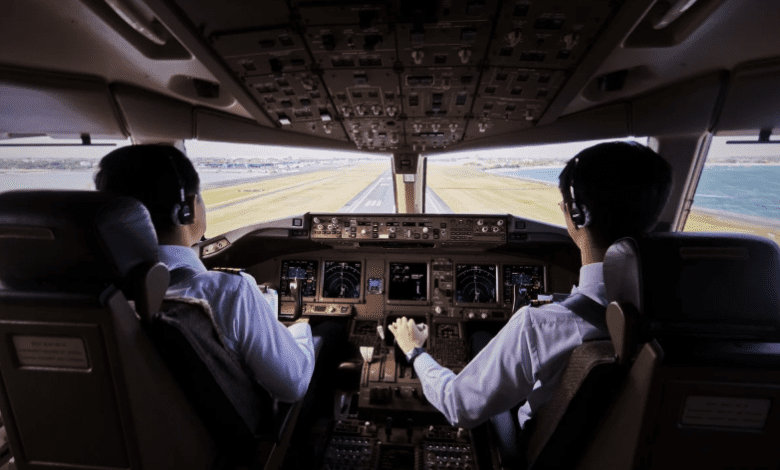
Hong Kong Metropolitan University has collaborated with the Airport Authority’s International Aviation Academy to launch a new degree programme for aspiring pilots in September. The course offers a licence at a cost of HK$1 million in tuition fees.
The new qualification is part of a business administration bachelor’s degree in aviation services management, one aimed at speeding up pilot recruitment.
University president Paul Lam Kwan-sing said the four-year programme would allow students to earn two qualifications, saving candidates HK$60,000 compared with pursuing their pilot training separately.
The joint programme will be offered starting next academic year. Students will have the option to pursue cadet pilot training in the summer semester of their third year. The first batch of students for the joint programme is expected to commence pilot training in May 2025.
Hong Kong is key to Beijing’s plan for the Greater Bay Area, but has been slow to integrate
The programme spans 14 months and includes six months of study in Hong Kong, followed by another eight months of flight practice in the United States. Students must undergo a minimum of 142 hours of flight training.
The course also offers preliminary interviews for trainees with the academy’s four partnered airlines – Hong Kong Airlines, HK Express, Greater Bay Airlines and Hong Kong Air Cargo – to help students secure conditional job offers. Cadets must also take a two-week multi-crew cooperation course.
Since the selection process started last September, the course has received more than 100 applications and has accepted 31 cadets in two classes. The academy aims to train 100 local cadets each year.
Academy president Simon Li Tin-chu said tuition fees could pose a challenge for aspiring pilots, but support from two banks and a finance company meant applicants could take out loans with favourable interest rates.
“Depending on the students’ creditworthiness, the loan schemes may provide a loan of 70 per cent to the full tuition fees, ensuring that students from different backgrounds have the opportunity to pursue this course,” he said.
Last year, the manufacturer Boeing estimated that 649,000 new pilots would be needed by 2042 to support the global commercial fleet, while 10,000 additional pilots are needed each year in China and Southeast Asia.
Secretary for Transport and Logistics Lam Sai-hung believed that the collaboration would help solidify Hong Kong’s position as an international aviation hub, while enhancing its influence as a regional training centre.
“We can attract talent from mainland China, Hong Kong and overseas, opening a new chapter in aviation training in Hong Kong and enriching the local offerings in aviation professional training,” he said.
S visitors, and possibly improving service.
But Law Cheung-kwok, a senior adviser at the Chinese University of Hong Kong’s aviation policy and research centre, disagreed, saying: “The city’s aviation market is too small to allow the existence of two [flag carriers].”
He said it took years of effort and market development for Cathay to achieve its status as the city’s dominant airline.
“It’s the same everywhere in the world, where one country only has one [flag carrier] or national airline,” he said. “We have had other local airlines before, but they couldn’t survive.”