Windy and wonderful
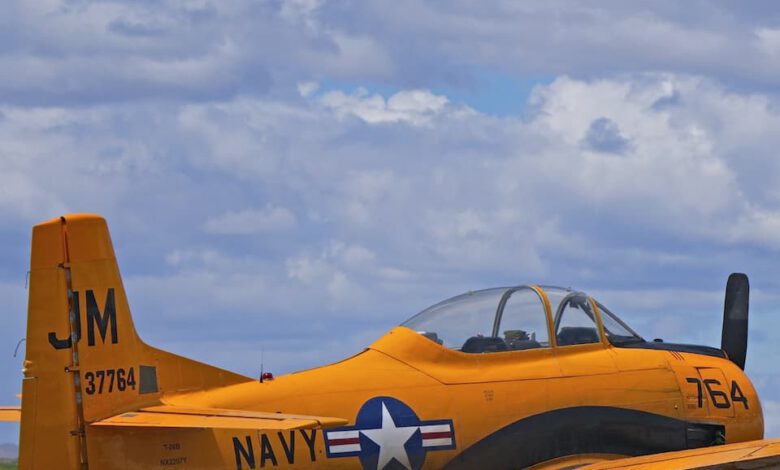
This ain’t your grandpa’s air show. When a competitor in a STOL competition shows up with a tiny taildragger named Angry Kitten, you can expect edgy action.
When top-tier radio-control fliers make the trek from Maine to central Washington to pilot $25,000 turbojet-powered large-scale models of the classic F-86 Sabre, it feels like you’ve been granted access to a limited and special club under the broad umbrella of aviation.
And when Air Force Maj. Lindsay Johnson takes selfies with the crowd moments after completing a rousing demonstration in the A-10 attack jet, she makes the ethereal feel real and present.
Such diverse aviators didn’t just happen to drop in on Moses Lake, Washington, the weekend of June 15-16, 2024. They were invited by Terry Quick, the energetic and unorthodox force behind the Moses Lake Air Show, who is on a mission to revamp the way we think about air shows.

There’s nothing wrong with seeing classic warbirds, aerobatic aircraft, and modern jets tear across show center like they do at so many venues each year. But Terry figures there’s more required to draw and grow a 21st Century crowd.
If a typical air show can expect to draw most of its crowd from a radius of 50 miles around the show site, Terry says the Moses Lake affair draws most spectators from farther than 50 — and often in the hundreds — of miles away.
They come to enjoy the ambience of the sometimes-windswept parking area where they can watch the flying from the comfort of their car, or wander the show line in pursuit of pilots and planes, vittles and veterans.

The 2024 iteration of the Moses Lake air show began at 8 a.m. with a Short Takeoff and Landing (STOL) competition put on by the National STOL organization.
The dirt strip for the STOL activity peeled back the dry vegetation to reveal a fine, powdery soil that billowed around each STOL competitor. It was a historic throwback to 1980 when eastward-drifting ash from erupting Mount St. Helens settled out of a threatening sky and made surface deposits several inches deep at Moses Lake.

Five classes of STOL planes and pilots flew during the Moses Lake event.
Washington’s own Rod Hewitt with his Angry Kitten, a 2000 Rans S7, leaped into the air with takeoff runs under 100 feet as tallied by metal measuring tapes running beside the airstrip.
A variety of stock-looking tricycle gear Cessnas lifted off after maybe 250-350 feet of roll along the volcanic ash-laden dirt. The soft dirt allowed pilots of those trikes to touch down while already braking the wheels, skidding to a halt quickly in a cloud.

Throughout 2024, 10 regional National STOL meets will attract general aviation pilots of all skill levels, in aircraft ranging from stock to pretty radical.
As the dust settled from the final STOL landing of each day, at 10 a.m. radio-controlled aircraft lifted off in front of the crowd. These are not your casual hobbyist models. Several multi-thousand-dollar jets, painted and weathered to look like operational vintage Air Force fighters, flew before the crowd, as did prop-driven warbirds and a half-scale rendition of Sean Tucker’s red Oracle Challenger aerobatic biplane.


The half-scale Oracle Challenger is flown by Bryant Mack of Phoenix at speeds up to 100 mph. A custom 6-cylinder 350cc engine runs on 91 octane auto gas to pull the red biplane through its paces.

Show organizer Terry Quick treats the RC fliers with the same respect he accords the pilots of full-size aircraft in the Moses Lake showline. The flying models are not a side show — they are part of the daily schedule taking place on center stage.

Saturday’s show was overlayed with strong, steady cold winds out of the south, clocked at least as fast as 43 mph. While this aligned with the air show flightline and was an asset to the STOL competitors, the layout at Moses Lake’s Grant County Airport meant the winds blew across the active runway, putting some of the full-size aerobatic performers out of limits for takeoff and landing. Sunday’s weather was much more benign, and a full slate of performers could fly.

The roster for performers included the Air Force’s A-10 demonstration team, led by pilot Maj. Lindsay Johnson. The team is on a farewell tour this year as the Air Force draws down its A-10 force.

Civilian acts on the roster included Brad Wursten and his MXS monoplane aerobatic performance, John Melby’s biplane FearBOSS routine, David Costa billing himself as the RenegadeAV8R in a TS-11 Iskra jet trainer from Poland, the SubSonex jet of Tom Larkin, Mark Peterson’s smoke-spewing A-37 Dragonfly attack jet from Boise, Yuichi Takagi in his red Pitts S-2S biplane, and the duo of Undaunted Airshows in an RV-7 and RV-8 in formation aerobatics.
It was a thoughtful mix of traditional and new performers and displays at Moses Lake.

According to Terry Quick, ticket sales are up 30% over last year’s tally.
It’s more difficult to equate that to the number of people in attendance, since general admission ticket sales allow an unspecified number of kids accompanying adults, and drive-in parking spots let as many people in as will fit in a vehicle.
His format continues to buck trends by bringing a lot of out-of-area air show fans to mingle with local attendees.
source: https://generalaviationnews.com/2024/06/26/windy-and-wonderful/