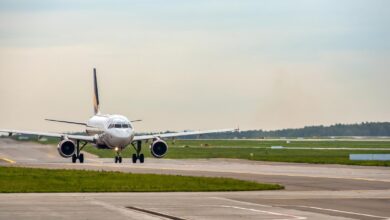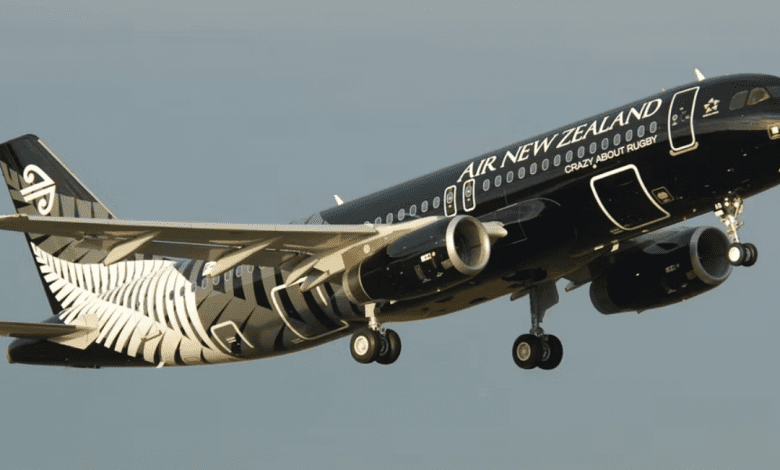
Air New Zealand has operated its first flight entirely in te reo Māori, one of New Zealand’s three recognized languages (the others being English and New Zealand sign language). NZ1236, a particular charter flight on the airline’s Airbus A320, took off from Te Whanganui-a-Tara (Wellington/WLG) to Tāmaki Makaurau (Auckland/AKL) on February 20.
The charter flight onboard ZK-OXK, a seven-year-old A320, was ferrying passengers to Te Matatini, described as the Kapa Haka Olympics, last held before the pandemic. NZ1236 departed from Wellington International Airport (WLG) 23 minutes behind schedule at 15:08 before touching down at Auckland International (AKL) at 15:53, a flight time of 45 minutes.
All in te reo Māori
Everything except the airline’s safety briefing was spoken in te reo Māori. Waiata (song) was heard across the terminal at check-in, the boarding area, and even in flight. A traveler had the idea to bring his guitar onboard, and then the crew serenaded passengers with song.

Air New Zealand Māori development lead Tupara Morrison noted that he would like to see te reo Māori grow in the future. In 2018, only 4% of New Zealand’s population was fluent in the language. However, Morrison expects to see knowledge of te reo expand more within the Air New Zealand culture:
“What you see through our cabin crew, through our front of house staff … we do want to extend that through the entire airline and that’s the challenge we have ahead of us. But there’s lots of encouragement from our leadership, from our board to ensure that te reo Māori is really promoted and becomes a normal part for the airline
Two teams onboard
One hundred seventy-one passengers were ferried to Auckland for Te Matatini, including two teams, Ngā Taonga Mai Tawhiti, and Ngā Uri Taniwha, and multiple competition judges and emcees.

As reported by Radio New Zealand, the Chairman of Te Matatina Herewini Parata commented on the remarkable initiative, hoping to see flights in te reo Māori expand to other regions in the future:
“He timatatanga tēnei. Tā tātau mahi kia whāia a tua atu, ehara i te mea e hiahia ana kia pēnei katoa i ngā wā katoa. Engari ko wai e kite, ko wai ka hua ko wai ka tohu, tēnā pea ka taea ēnei āhuatanga mō ngā kapa haka katoa o te motu.
(This is a start. Our job is to ensure that it continues happening, although this isn’t something that will happen all the time. But who can say, perhaps it can expand to all the kapa haka across the country.)