The question of ownership
It was back in the post-hippie days of the late 1980s that I began my quest to become a pilot. Although I’d grown up in what was ostensibly referred to as an aviation family — my father was an airline pilot — I knew almost nothing about the process of learning to fly.
Dear old dad got his training in the U.S. Air Force, then additional training at the airline. However, his flight training experience bore almost no resemblance to my own.
I went the civilian route — a path he had never experienced and one I found tremendously difficult to understand in the pre-Internet age. I searched for answers, but found few that made much sense to me.
That is a leading cause of why my flight training cost so much more than it should have and took so much longer than I’d imagined.
I have a clear recollection of a phone conversation I had with a CFI back in the early days of my training. This wasn’t my CFI. It was one I’d never met. I never did meet him either. We just had that one phone call. The crux of the conversation was that he would be happy to instruct me if I owned an airplane. He strongly recommended I buy one if my goal was to shift into flying as a career.
Or so I thought.
In truth, it’s not crazy at all. It’s actually a reasonable path to earning flight time and a broader aeronautical education.
Consider the benefits:
- If you own the airplane, you’re flying for the cost of fuel, maintenance, and insurance. A basic trainer that might cost $100 per hour or more to rent might be operated for half that amount.
- Access to a CFI who is understandably motivated to build time and earn dollars will become a negotiable process. Again, the cost of access could be as little as half what you would pay at a flight school.
- Putting yourself in the position to maintain the airplane to airworthy standards will cause you to learn far more about the inner workings of the machine than you are likely to learn when exclusively operating rented aircraft.
Here’s the thing: The airplane most of us would be likely to buy as a primary trainer is going to be a used aircraft. Probably, a very used aircraft. The odds are good that we will be looking at airframes that are decades old, with thousands of hours on them, powered by engines that were installed long ago.
My advice on this point has been consistent for years: You’re looking for an airplane that is ugly, slow, and inexpensive to operate. Don’t seek out some exotic model that sets your heart aflutter. There’s plenty of time for that later.
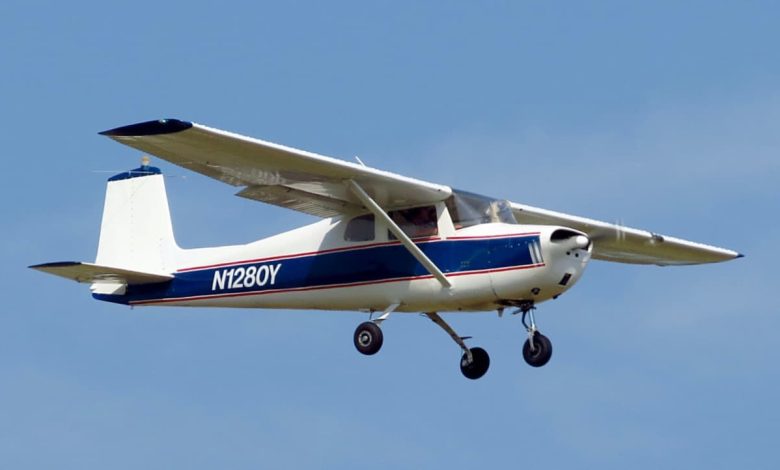
A young man I’ve known for a few years recently took me up on this advice. He’s been in flight training for years without achieving his ultimate goal. Access to aircraft has been a problem. So he searched and found a truly unattractive Cessna 150 with a high-time engine, an analog panel, and a purchase price that’s well below what a new Hyundai would set him back.
In exchange for parting with those dollars he’s obtained 24/7/365 access to a flying machine that can get him up into the traffic pattern for some touch-and-goes or launch him off on an adventure over the horizon that he’ll remember with fondness.
He can dial back on the power and loaf along at a leisurely pace, building time while conserving fuel, which is another way of saying he can train at a lower cost than he’d ever imagined.
But those maintenance decisions will teach great lessons too. Is it time for new tires or is that flat spot acceptable? Does that ignition harness need to be replaced or is it okay to let it go until the next annual inspection? Are these radios sufficient, or would the airplane be better with an upgraded model?
And the big one: Can I cut the cost of my annual inspection by finding an A&P with Inspection Authorization who will let me participate in an Owner Assisted Annual Inspection?
In the end my friend will spend far more on his private pilot certificate than many of his peers will. Yet, when he completes his testing and leaves the Designated Pilot Examiner’s office, he’ll be walking out onto the ramp to move his own airplane. He will be free to fly anytime he wants, anywhere he wants, and stay out from home base for as long as he wishes. That’s tough to do with a rental. Or he could decide to sell the airplane and recoup the majority of his flight training costs.
It took me years to buy my first airplane: A straight tail, fastback Cessna 150. I wish I’d known and believed in the potential benefits of making that purchase a decade earlier.
But as I say, I was suffering from an acute case of stupidity. Hopefully, you will be sharper and more ambitious than I was in those early years.