Aviation news international- My mother, a student pilot, sitting at the dinner table asked: What do you think of requiring drivers to get a biennial driving review?
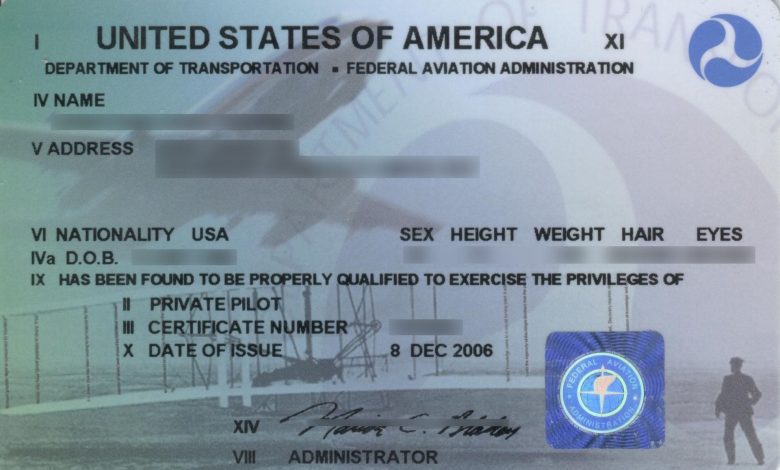
Now, just for background for my non-pilot readers, pilot’s licenses (called certificates by the FAA) are like diamonds: They last forever.
Which is not to say that once you have one, you can use it forever. Nope. You need three additional things to “exercise” the “privileges” of your license.
- First, for most flying operations, you need to have some sort of proof of good health.
- Second, to carry passengers, there are recency of experience requirements.
- And third, for most pilots, every two years we have to complete a short round of continuing education that used to be called a biennial flight review — now just called a flight review — that consists of one hour of ground school and one hour of flight training to ensure that our skill and knowledge sets are up to snuff.
I say for most pilots, because — like everything else in aviation — there are exceptions.
Student pilots, if in training for more than two years, don’t need a flight review.
If you take a check ride for a new certificate or rating, the two-year clock resets.
There’s also an on-going FAA-sponsored proficiency program called WINGS that can substitute for a flight review.
And for those of you who are airline bound, it’s possible you’ll take your first flight review after you retire, as airline proficiency checks are also a substitute.
Despite having trained nearly a thousand CFIs, I couldn’t find a single one of the little SOBs to give me my flight review. Again.
Two years ago, the same damn thing happened and I ended up suffering through a regulatory-imposed no-fly period. Yeah. The regulations that are supposed to ensure I’m sharp in the air forbade me from actually keeping up with my routine flying, even though plenty of evidence suggests the best path to safe flying is flying a lot.
If it hadn’t been affecting me personally, the irony would have appealed to my warped sense of humor.
But even though I was facing Round Two of regulatory-imposed no flying, and even though I was grousing and complaining and muttering under my breath about what a stupid rule §61.56 is for active pilots like ME, I really do believe in it.
So with something as inherently dangerous as flying, yeah, it is a good idea to have an expert review your skills now and again — whether you are flying a little or a lot.
And, as rules and regulations evolve and change, and some folks are better at keeping up than others, a little classroom catch up is also a good idea.
At least for everyone else. I still think I don’t need the stupid review.
Of course, other professions recognized the need for refresher training and oversight long before pilots were, in 1973, first required to get “continuing education” in the form of the flight review. For decades, teachers have been required to have continuing education to maintain their certification. Doctors need it to keep their licenses. As do lawyers, accountants, some engineers, and even — surprisingly — architects.
And, compared to all of those other professions, our requirements of a couple of hours every two years are modest, to say the least. Really, would you even go to a doctor who only needed one hour of classroom and one hour of clinical practice every two years?
Now, I mentioned that the flight review used to be called the biennial flight review (or BFR to its friends) and was changed to simply “flight review.” That’s because most pilots don’t spell very well, and biennial and biannual sound a lot alike — so the old name got a lot of folks confused.

Actually, I think you could make a good argument for biannual flight reviews for pilots who don’t fly much, but given how short of CFIs we are for the every two-year requirement, I can’t imagine what it would be like if we needed them twice a year instead. In many parts of the country no one would be flying! (Except, you know, those young pups on their way to the airlines who are sucking up all the CFI time.)
But what about the question of drivers? Like pre-1973 pilots, once you have your license, you might never take another driving test in your life.

So, should we make drivers periodically prove that they know the current operating and driving rules of their states? Should we make drivers periodically demonstrate proper control of the machines they fly in formation? The machines they routinely hurtle at each other head-on with closing speeds of 130 knots with only mere feet between them when they pass?
Yeah, mom, I actually do think that’s a good idea.
Of course, the problem with that is, that even though I drive a lot, I’d probably have a hard time finding a driving instructor. And then I’d end up suffering through a regulatory-imposed no-drive period…
On second thought, I think it’s only a good idea if all the other people have to do it, but not me.